Hafler Pro125 Mosfet Power Amp Hi-Fi Sound Quality
Hafler
Pro125 Mosfet Power Amp Hi-Fi Sound Quality
- Condition
- Good
- Type
- Power
- Finish
- Black
Ships to you
Posted with tracking, and shipping is included — the price you see is the price you pay. This one takes up to seven days to go out, and you'll get the tracking the moment it does.
Description
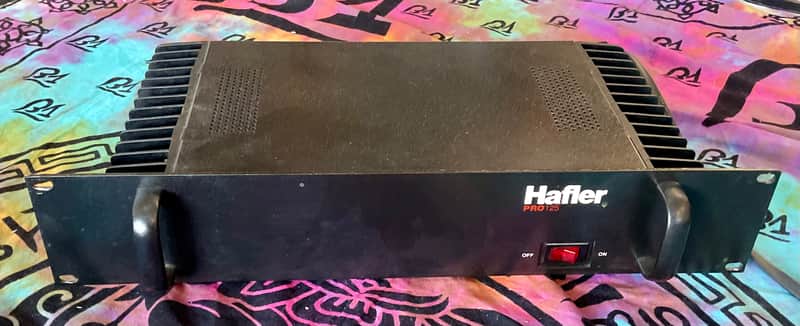
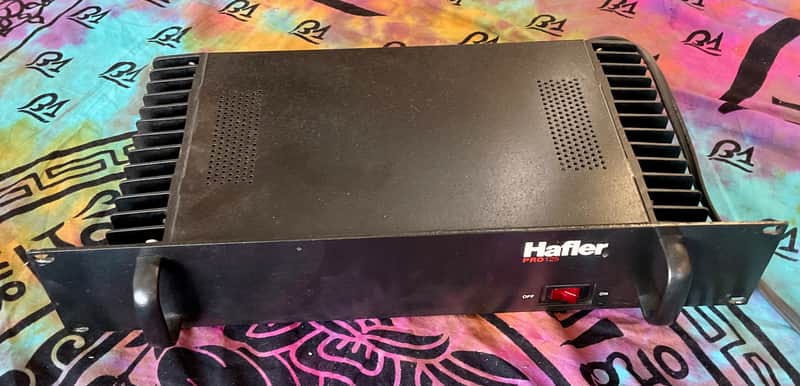
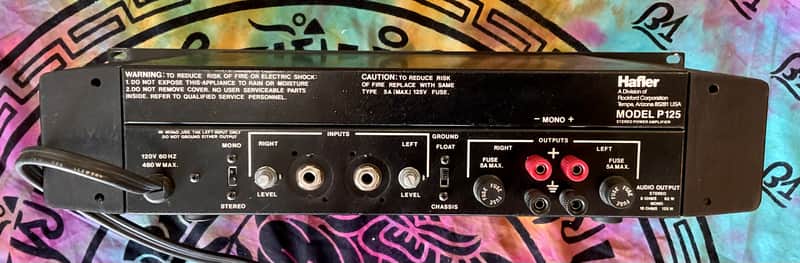
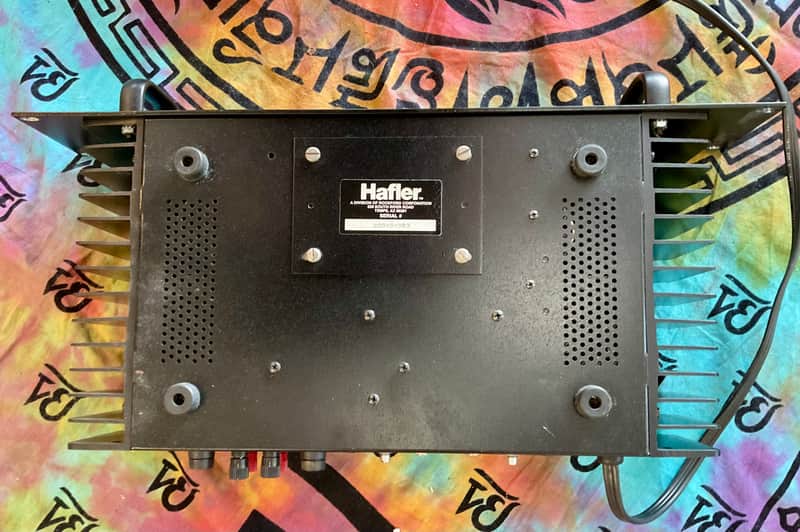
Hafler Pro125 Mosfet ,Hi-Fidelity Sound, Power Amp David Hafler was one of the founders of legendary Dynaco in 1954, and started the legendary Hafler company in 1977. The Hafler PRO1200 (P125, DH120) is a very high quality 60 watts-per-channel MOSFET class AB stereo power amplifier. MOSFETs are solid-state devices that work on principals more similar to vacuum tubes than bipolar transistors — and it sounds great! This is a studio & audiophile quality amplifier. My father built a Dynaco stereo system in the '70s which he gave to me when I was 14 when he upgraded to a Revox system. He was a manufacturer's representative for Hafler pro audio products for many years & I started using Hafler when I was 17, been a big fan ever since. PS: I'm now in my early 50s. I've used this amp for some KRK & EV near field studio monitors, & more recently for my 2" compression drivers in my audiophile system. I've got a lot of Hafler amps as well as other brands too & need to stop hoarding so much gear. I don't want to sell it, but I've just got too much gear that I'm not using. I've tested it & cleaned it, it will be very well packed, owners manual on CD included. And yes, the PRO1200, P125, & DH120 are essentially the same, just with different packaging. Like most made-in-USA audio gear, it easily outperforms its rated specifications easily putting out 77 WPC continuous and 118 W burst power into 8Ω in 10 mS bursts at clipping into 8Ω, and only has about 0.001% THD at most power levels. 30+ years ago when it was introduced, it astounded the world in having performance so high that it exceeded the abilities of most laboratory equipment of its day. It's a traditional class AB linear power amplifier, no ICs in the preamp stage (its fully discrete), no switching output rails, & no switching power supply. It has a traditional unregulated linear power supply with a big power transformer in the middle of the case, a bridge rectifier and two large Sangamo 6,600 µF 60V capacitors that run at ±54 VDC at 120 VAC input, or ±52 VDC at 115 VAC as measured. The "loose" regulation of the power supply gives it much greater burst power than continuous (perfect for music), and also means that power output doesn't completely double as speaker impedance halves. It has four power MOSFETs (2 per channel) in TO-3 packages mounted to two big anodized aluminum heat sinks on opposite sides of the case. It has one 5 amp slow-blow power-input fuse, and 4A fast-blow fuses on the B+ and B- rails of each of the two power amp modules. It has speaker fuses to protect your speakers from you doing something stupid. - Output Power: Stereo - Less than 0.009% THD at any power level up to 60 watts per channel, both channels driven, from 20-20,000 Hz. Mono - 150 watts into 8Ω. - Audio Input: One pair of 1/4" jacks with individual potentiometers. - Audio Output Connectors: Standard 5-way binding posts - SMPTE Intermodulation Distortion: < 0.005% from 1 - 60 watts into 8Ω. - THD at 60 WPC into 8Ω: 20 Hz: 0.002%, 1 kHz: 0.002%, 20 kHz: 0.006% - Frequency Response into 8Ω: 10 - 40,000 Hz at 60 watts, +0, -0.5 dB, 4 - 200,000 Hz at -3 dB at 1 watt. - Crosstalk: > 75 dB at 20 Hz, > 85 dB at 1 kHz, > 65 dB at 20 kHz. - Signal to Noise Ratio: >100 dB unweighted, referred to 60 watts. - Damping Factor: 100 at up to 1 kHz into 8Ω. - Rise Time - 2 µS from 10% to 90% with a 45 V p-p 10 kHz square wave. - Slew Rate: 30 V/µS with a 45 V p-p 10 kHz square wave. - Semiconductors: 4 power MOSFETs: one pair of complementary Hitachi 2SK134 and 2SJ49 lateral MOSFETs per channel. Each of these power MOSFETs was individually tested, graded and sorted by Hafler. Each was stamped with a number from one to five and assembled accordingly into amplifier modules. - 22 transistors. - 23 diodes. - 8 Zener diodes. - 1 bridge rectifier. - Made in the United States of America (Tempe, Arizona). ccEJB
Condition notes
Good
Specifications
- year
- Late 80's
Seller
Westlake Village, CA
★ 5.00
Description
Hafler Pro125 Mosfet ,Hi-Fidelity Sound, Power Amp David Hafler was one of the founders of legendary Dynaco in 1954, and started the legendary Hafler company in 1977. The Hafler PRO1200 (P125, DH120) is a very high quality 60 watts-per-channel MOSFET class AB stereo power amplifier. MOSFETs are solid-state devices that work on principals more similar to vacuum tubes than bipolar transistors — and it sounds great! This is a studio & audiophile quality amplifier. My father built a Dynaco stereo system in the '70s which he gave to me when I was 14 when he upgraded to a Revox system. He was a manufacturer's representative for Hafler pro audio products for many years & I started using Hafler when I was 17, been a big fan ever since. PS: I'm now in my early 50s. I've used this amp for some KRK & EV near field studio monitors, & more recently for my 2" compression drivers in my audiophile system. I've got a lot of Hafler amps as well as other brands too & need to stop hoarding so much gear. I don't want to sell it, but I've just got too much gear that I'm not using. I've tested it & cleaned it, it will be very well packed, owners manual on CD included. And yes, the PRO1200, P125, & DH120 are essentially the same, just with different packaging. Like most made-in-USA audio gear, it easily outperforms its rated specifications easily putting out 77 WPC continuous and 118 W burst power into 8Ω in 10 mS bursts at clipping into 8Ω, and only has about 0.001% THD at most power levels. 30+ years ago when it was introduced, it astounded the world in having performance so high that it exceeded the abilities of most laboratory equipment of its day. It's a traditional class AB linear power amplifier, no ICs in the preamp stage (its fully discrete), no switching output rails, & no switching power supply. It has a traditional unregulated linear power supply with a big power transformer in the middle of the case, a bridge rectifier and two large Sangamo 6,600 µF 60V capacitors that run at ±54 VDC at 120 VAC input, or ±52 VDC at 115 VAC as measured. The "loose" regulation of the power supply gives it much greater burst power than continuous (perfect for music), and also means that power output doesn't completely double as speaker impedance halves. It has four power MOSFETs (2 per channel) in TO-3 packages mounted to two big anodized aluminum heat sinks on opposite sides of the case. It has one 5 amp slow-blow power-input fuse, and 4A fast-blow fuses on the B+ and B- rails of each of the two power amp modules. It has speaker fuses to protect your speakers from you doing something stupid. - Output Power: Stereo - Less than 0.009% THD at any power level up to 60 watts per channel, both channels driven, from 20-20,000 Hz. Mono - 150 watts into 8Ω. - Audio Input: One pair of 1/4" jacks with individual potentiometers. - Audio Output Connectors: Standard 5-way binding posts - SMPTE Intermodulation Distortion: < 0.005% from 1 - 60 watts into 8Ω. - THD at 60 WPC into 8Ω: 20 Hz: 0.002%, 1 kHz: 0.002%, 20 kHz: 0.006% - Frequency Response into 8Ω: 10 - 40,000 Hz at 60 watts, +0, -0.5 dB, 4 - 200,000 Hz at -3 dB at 1 watt. - Crosstalk: > 75 dB at 20 Hz, > 85 dB at 1 kHz, > 65 dB at 20 kHz. - Signal to Noise Ratio: >100 dB unweighted, referred to 60 watts. - Damping Factor: 100 at up to 1 kHz into 8Ω. - Rise Time - 2 µS from 10% to 90% with a 45 V p-p 10 kHz square wave. - Slew Rate: 30 V/µS with a 45 V p-p 10 kHz square wave. - Semiconductors: 4 power MOSFETs: one pair of complementary Hitachi 2SK134 and 2SJ49 lateral MOSFETs per channel. Each of these power MOSFETs was individually tested, graded and sorted by Hafler. Each was stamped with a number from one to five and assembled accordingly into amplifier modules. - 22 transistors. - 23 diodes. - 8 Zener diodes. - 1 bridge rectifier. - Made in the United States of America (Tempe, Arizona). ccEJB
Condition notes
Good
Specifications
- year
- Late 80's
SPKRS holds your payment until you confirm you have the item.